Beyond visual line of sight (BVLOS) is no longer a niche capability reserved for military or experimental programs. As commercial drone applications expand into powerline inspection, emergency response, and long-distance survey, operators increasingly need to fly beyond the visual range of a remote pilot. However, the technical and regulatory gap between a standard Part 107 flight and a compliant BVLOS UAV operations mission is substantial.
In the United States, the FAA requires a waiver for operations beyond visual line of sight under 14 CFR §107.31, and the agency aims to process waiver requests within 90 days depending on complexity. In Europe, EASA’s risk-based framework already enables BVLOS authorizations, though mutual recognition across member states remains a work in progress. The common thread is clear: regulators are not asking whether BVLOS is technically possible—they are asking whether the operator can demonstrate an equivalent level of safety.
BVLOS Compliance Starts with the C2 Link—Not the Aircraft
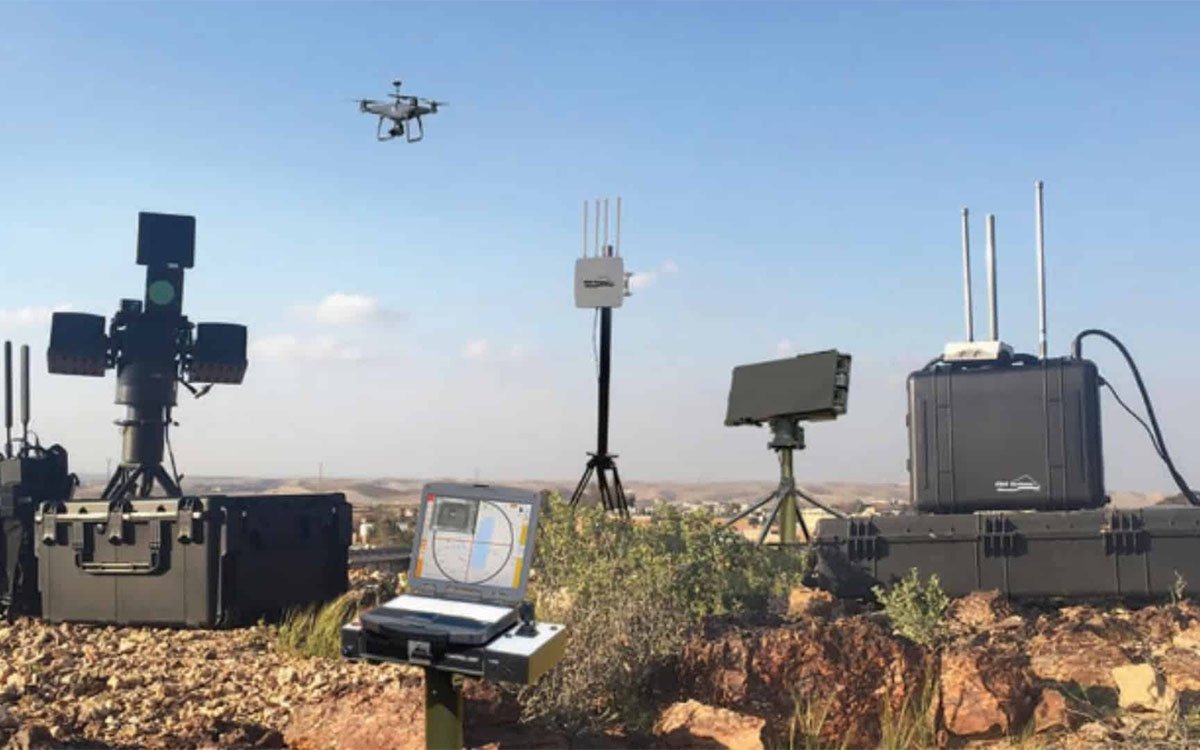
Most discussions about BVLOS focus on the airframe or the autopilot. In practice, the command and control (C2) link is the single most critical subsystem. Without a reliable, low-latency, and secure connection between the remote pilot and the aircraft, no amount of onboard autonomy can satisfy safety regulators.
Modern BVLOS architectures are increasingly hybrid. Research from Cranfield University highlights that satellite-terrestrial hybrid networks—combining LEO satellite backhaul with ground-based 5G—can extend coverage and reliability in geographically challenging environments where terrestrial infrastructure alone is insufficient. This matters for SoarApex customers operating in mountainous terrain, coastal regions, or remote inspection corridors where a single link technology is a single point of failure.
SoarApex’s UAV Data Link Systems are engineered around this multi-path principle. The DLS Industrial and DLS Integrated configurations support high-bandwidth, long-range secure links that can serve as the primary C2 path or as a redundant backup, depending on mission profile.
Detect-and-Avoid Is the Regulatory Bridge Between Automation and Safety
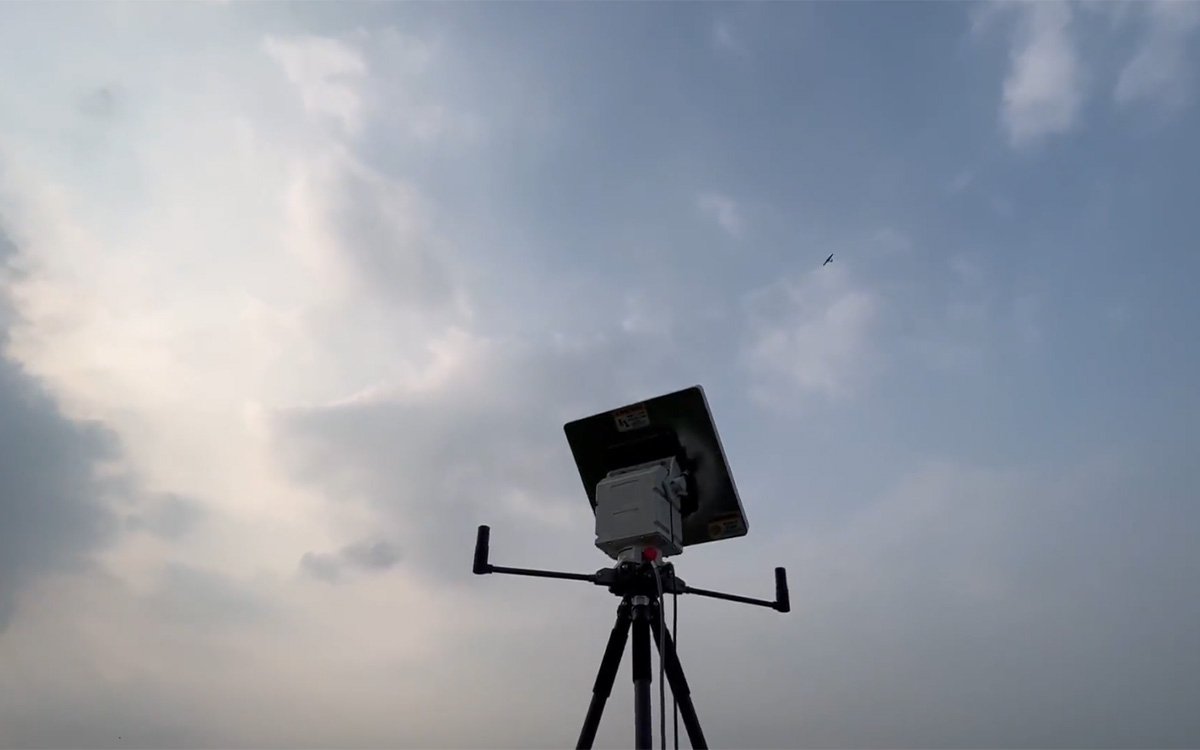
The FAA’s Part 107 waiver framework does not prescribe a specific technology for BVLOS. Instead, it asks the operator to explain how they will see and avoid other aircraft without maintaining visual line of sight. In practice, this means a combination of ADS-B In, ground-based radar, or other detect-and-avoid (DAA) sensors, plus a documented pilot response procedure.
For SoarApex integrators, this translates into two engineering requirements. First, the ground control station must display traffic and DAA alerts in a way that the remote pilot can act on within the available reaction time. Second, the aircraft’s flight controller must accept external DAA inputs and support automated avoidance maneuvers when the pilot does not respond in time.
The SoarApex Command Control Terminals—particularly the Professional CCT and Integrated CCT—are built with expandable I/O and multi-screen workflows that accommodate DAA feeds alongside telemetry, video, and mission planning. This is not an accessory feature; it is a prerequisite for BVLOS approval in most jurisdictions.
What Real BVLOS UAV Operations & Inspection Mission Looks Like
Consider a powerline inspection scenario in complex coastal mountainous terrain. A recent study from State Grid Zhejiang describes a BVLOS autonomous flight system based on high-precision 3D laser point cloud models and a “segmented relay” operation mode, which overcame endurance and communication limitations while achieving a defect identification accuracy rate exceeding 92%.
This mirrors the architecture SoarApex recommends for long-corridor inspection:
- Pre-flight: Load a 3D terrain model into the ground station to define safe BVLOS corridors and emergency landing zones.
- In-flight: Use the ATS antenna tracking system to maintain link margin as the aircraft moves beyond line of sight, with DLS as the primary UAV C2 link.
- Contingency: If link quality degrades below a defined threshold, the aircraft autonomously transitions to a relay point or returns to a pre-mapped safe location.
In Europe, similar BVLOS inspection programs—such as SP Electricity North West’s Project VOLT—are deploying drone-in-a-box systems piloted from remote operations centers over 200 miles away, using AI-processed data for fault detection and condition monitoring. The technology stack is maturing; the bottleneck is increasingly organizational and regulatory rather than purely technical.

The Path Forward: Build for the Waiver You Will Need Tomorrow
Whether you operate under FAA Part 107 waivers, EASA’s SORA framework, or a national authority’s equivalent, the direction of travel is consistent. Regulators are moving toward performance-based oversight, where the operator must demonstrate—not merely claim—that the BVLOS UAV operation maintains an equivalent level of safety to crewed aviation.
For system integrators and enterprise operators, this means designing margins from the start. A BVLOS UAV C2 link with automatic failover. A ground station that displays DAA alerts without burying them in menus. A data link architecture that can incorporate satellite backhaul when terrestrial coverage is absent. And a documentation trail that connects every design decision to a specific safety requirement.
SoarApex’s platform approach—modular data links, tracking antennas, and command terminals that interoperate across the eV3, eX6, and custom airframes—is built around this reality. The goal is not simply to fly farther. It is to fly farther with the evidence that regulators require.
Explore the full UAV Data Link Systems and Antenna Tracking Solutions to see how the pieces fit together. For a deeper technical discussion on integrated BVLOS mission architecture, revisit our article on Beyond Line of Sight: Integrated UAV BVLOS Mission System Architecture.
For operators evaluating their first BVLOS program, the FAA Part 107 Waivers page and the EASA drone framework remain the authoritative starting points. To dive into the networking theory behind hybrid links, see this IEEE paper on Satellite-Terrestrial Integration. The technology exists today. The difference between a grounded concept and an approved operation is the willingness to engineer for compliance from the first design review.