
The innovation of phased array antennas is revolutionizing satellite communication for unmanned systems. Through electronic beamforming and miniaturized radar chips, these advanced antennas eliminate mechanical rotation, enabling dynamic tracking and seamless connectivity for VTOL fixed-wing platforms and multi-rotor UAV drones operating in challenging environments.
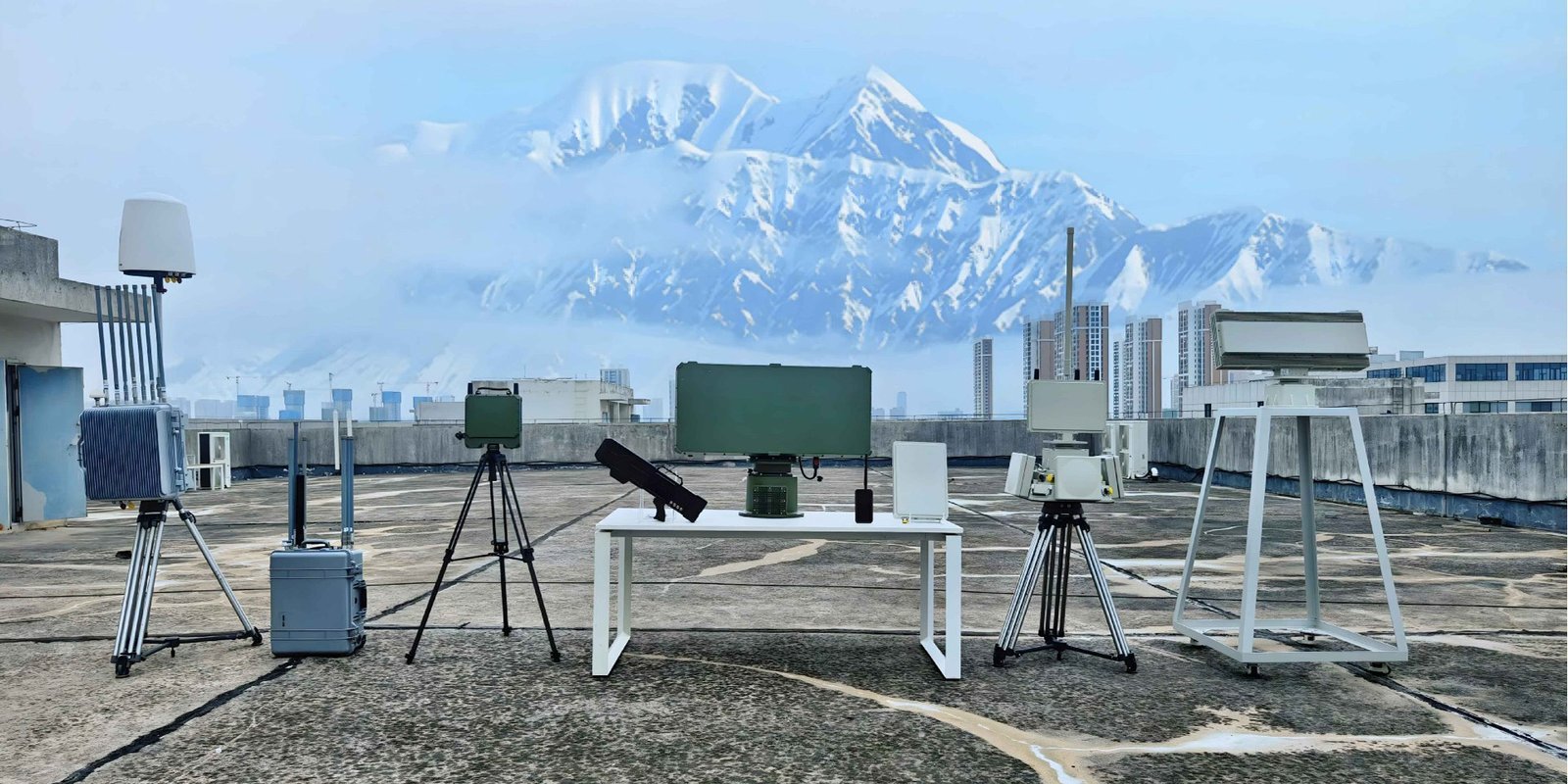
In today’s highly interconnected era, satellite communication extends to remote lands, vast oceans, and high-speed moving aircraft. Yet traditional satellite terminals with bulky parabolic dish antennas—complex to install, mechanically rotated, and prone to failure—have prevented satellite communication from entering the mass market. The innovation of phased array antennas, with no mechanical rotation, dynamic beam-forming, and miniaturization, is breaking these barriers and driving commercialization.
The Working Principle of Phased Array Antennas
Understanding how electronic beamforming replaces mechanical rotation in modern UAV communication systems.
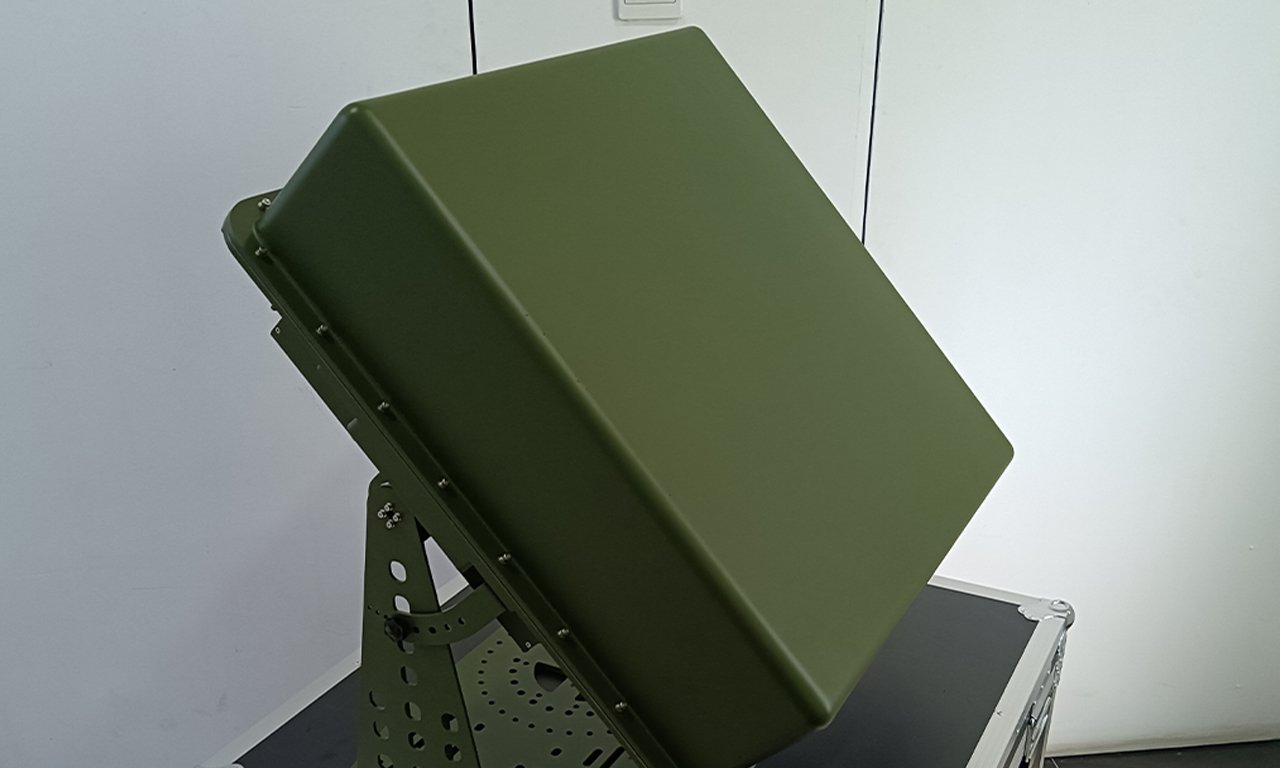
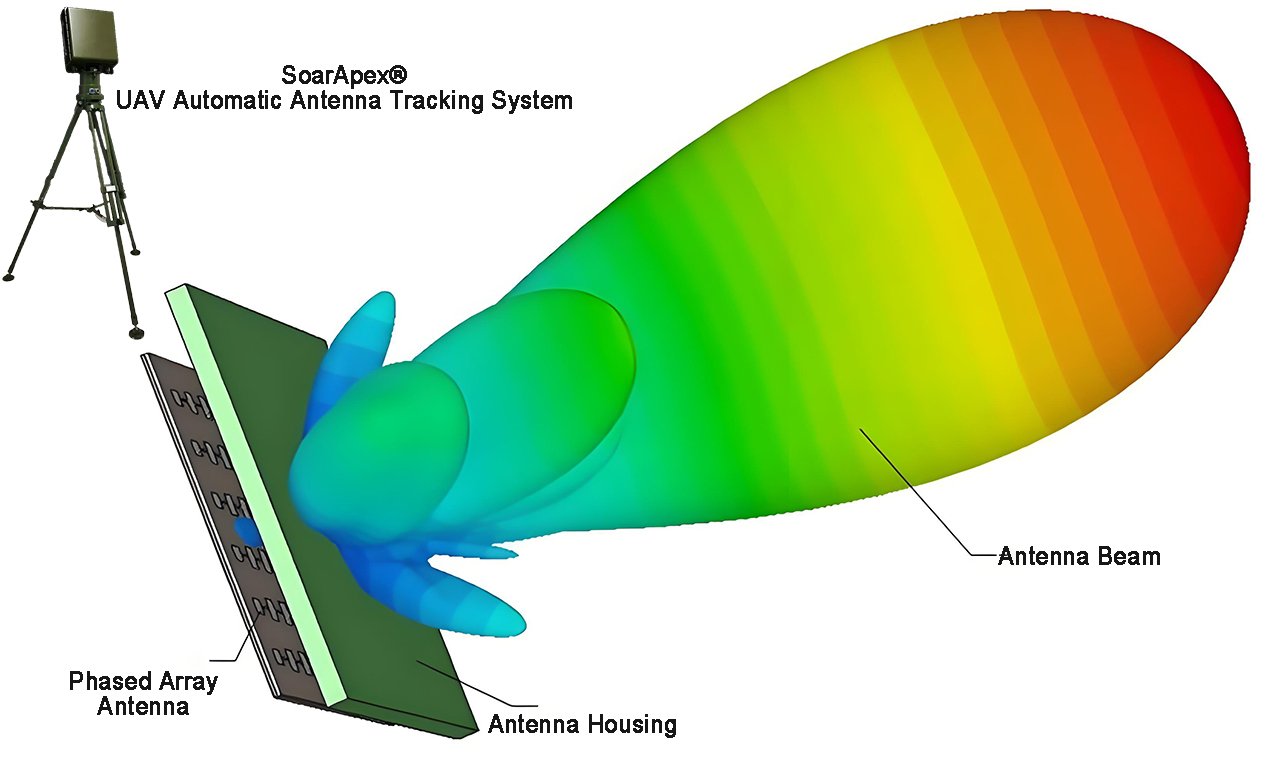
Electronic Beam Steering
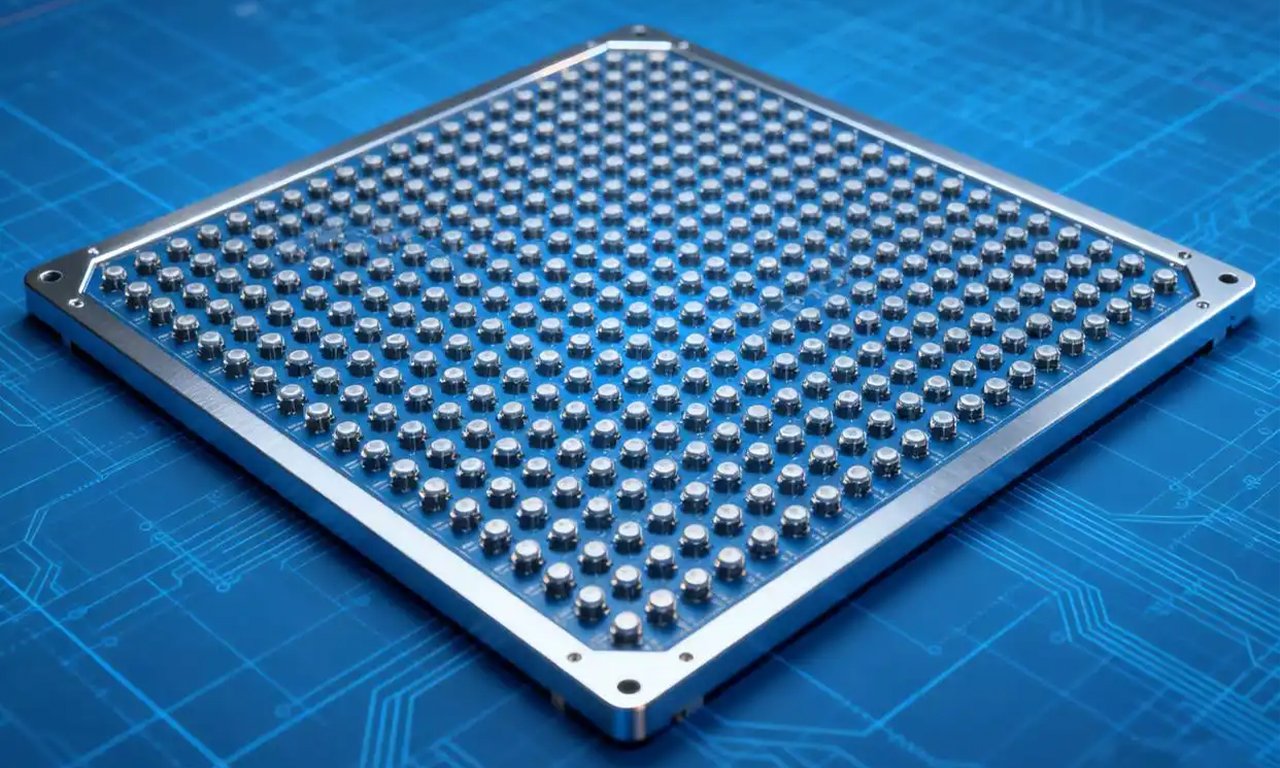
Unlike traditional antennas that rely on bulky mechanical devices, the innovation of phased array antennas changes electromagnetic beam direction by precisely controlling electrical signal phase. Each antenna unit connects to an independent RF front-end and phase shifter.
When all units simultaneously emit electromagnetic waves, adjusting each unit’s signal phase causes signals to superimpose in phase in a specific direction—forming a narrow, energy-concentrated beam—while signals from other directions cancel out.
Key Capability
Software-controlled beamforming enables instantaneous beam switching at nanosecond speeds, effortless tracking of high-speed LEO satellites, and simultaneous formation of multiple independent beams for multi-satellite communication.
From Military to Commercial: Cost Reduction Breakthroughs
How semiconductor integration and manufacturing innovation make phased array antennas accessible for UAV applications.
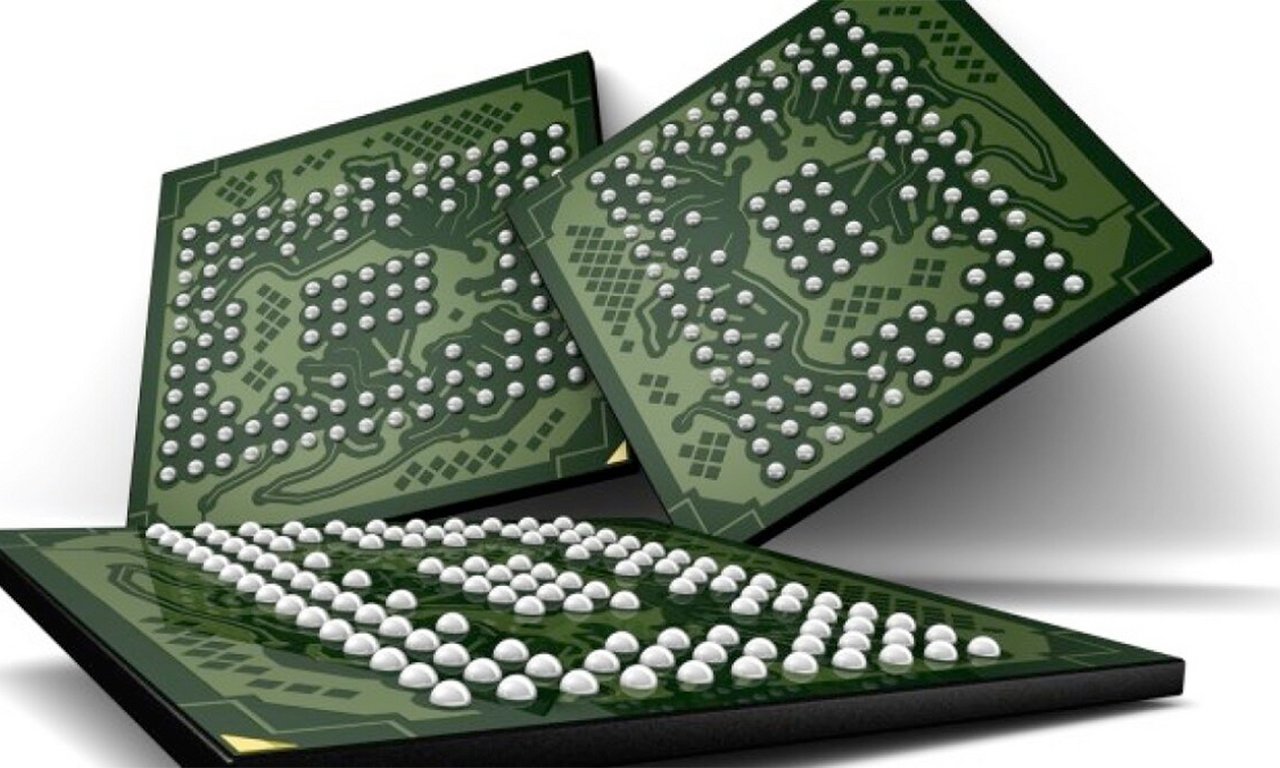
Semiconductor Integration
The core challenge in transforming phased array antennas from military aerospace to commercial applications lies in achieving low cost and miniaturization. Through large-scale integrated circuit innovation, engineers now integrate multiple RF front ends onto a single silicon wafer.
These chips use mature semiconductor processes—silicon germanium (SiGe) or CMOS—making single-chip integration possible. While gallium arsenide (GaAs) still serves high-frequency applications, SiGe and CMOS dominate commercial phased array antenna chips due to cost and integration advantages.
Manufacturing Innovation
- PCB technology replaces precision-machined metal for antenna arrays
- Sparse array optimization reduces element count while maintaining gain
- Sub-array technology balances performance and cost through shared RF front-ends
Digital Phased Array Technology
The rise of digital processing opens new paths for performance improvement and software-defined capabilities.
Software-Defined Beamforming
In traditional analog phased arrays, phase and amplitude control occurs in the analog domain through phase shifters and attenuators—introducing loss and consistency issues. The innovation of phased array antennas through digital technology digitizes analog signals, achieving phase and amplitude control via high-performance DSPs or FPGAs.
This digital approach improves beamforming accuracy and flexibility while enabling more functions on digital chips. It further promotes integration, reduces system complexity and cost, and paves the way for software-defined radio (SDR) in satellite terminals.
SDR Advantage
Antenna functionality can be continuously optimized through software upgrades, greatly extending product lifecycle and enabling rapid adaptation to new communication standards.
Satellite Communication Applications
From LEO tracking to IoT connectivity—phased array antennas are transforming how UAVs communicate beyond visual line of sight.
LEO Satellite Tracking & Handover
Low Earth orbit satellites travel at several kilometers per second—traditional mechanical antennas cannot achieve sustained tracking. The innovation of phased array antennas enables instantaneous electronic beam switching for seamless satellite “handshake” and “switching” within milliseconds.
For VTOL fixed-wing platforms and multi-rotor UAV drones on long-range missions, this means uninterrupted broadband connectivity when paired with integrated data link systems and antenna tracking systems.
- Automotive/Airborne: Miniaturized planar arrays integrate seamlessly into vehicle/aircraft tops
- Satellite IoT: Low-cost chips enable sensor and monitoring device connectivity in remote areas
- Multi-beam: Simultaneous communication with multiple satellites for redundancy
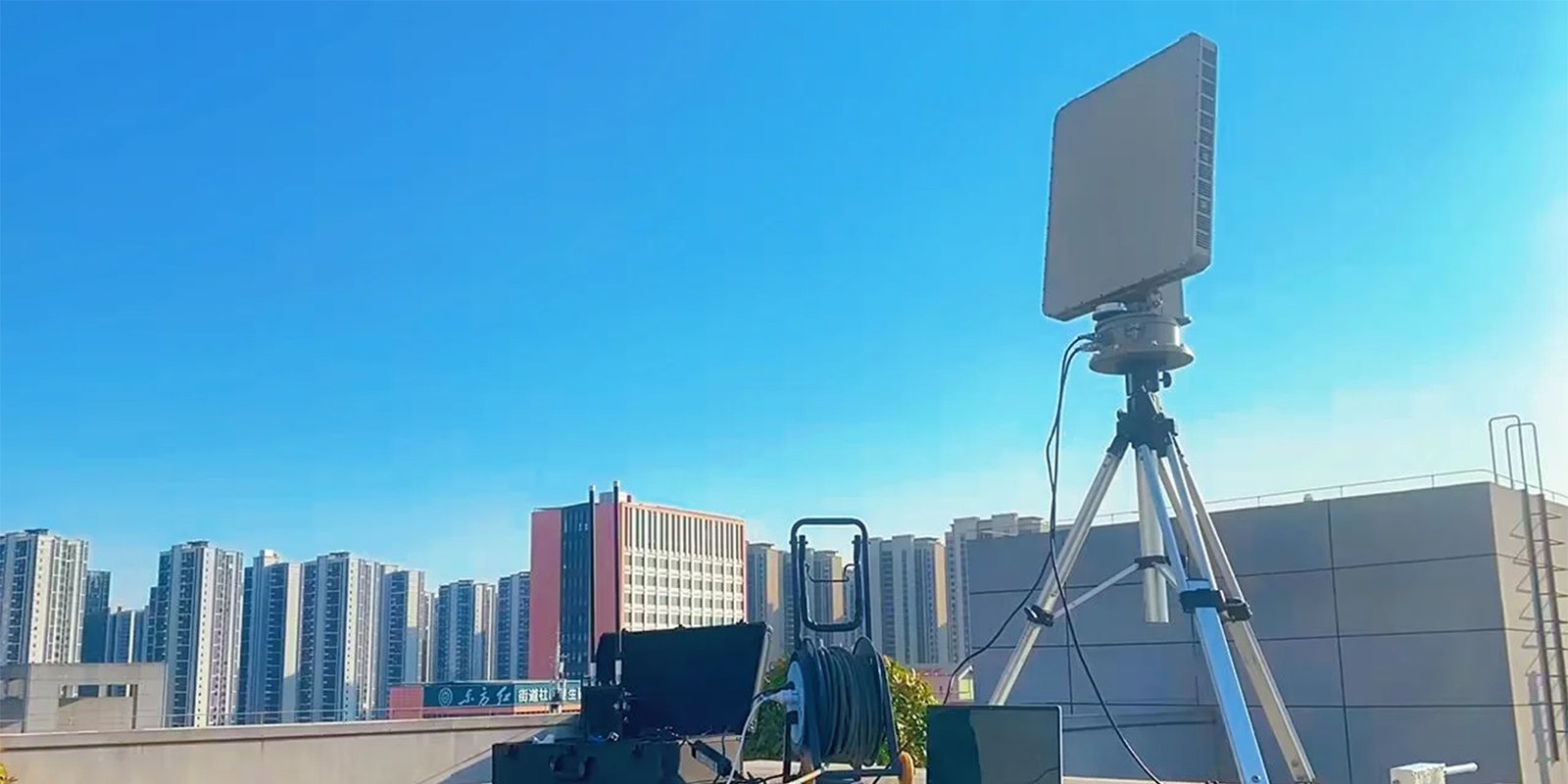
LSFD+002 2D Phased Array Radar for Low Altitude Surveillance
A new weapon for safeguarding low altitude safety at the forefront of phased array antenna innovation.
Ultra-Low Altitude Multi-Target Surveillance
In an era of frequent drone “black flight” incidents and escalating low altitude security threats, efficient and accurate all-weather monitoring of ultra-low altitude small targets has become urgent. SoarApex presents the LSFD+002—a two-dimensional phased array radar specially designed for highly sensitive areas.
Core Advantages
- X-band operating frequency with strong anti-interference capability
- Detection distance ≥ 5km for small unmanned aerial vehicles
- Simultaneous tracking of ≥ 100 targets with TWS multi-target tracking
- Full azimuth/elevation coverage of ±45° for 3D low altitude monitoring
- Linkage with opto-electronic, infrared, and countermeasure systems
Whether securing the World Cup, professional leagues, Winter Olympics, Asian Games, or other critical infrastructure, the LSFD+002 provides reliable, intelligent, and efficient low altitude warning solutions when integrated with command control terminals.
| Parameter | Specification | Application |
|---|---|---|
| Frequency Band | X-band | Strong anti-interference, all-weather operation |
| Detection Range | ≥ 5km (small UAVs) | Airport perimeter, nuclear plants, oil fields |
| Target Capacity | ≥ 100 simultaneous targets | Large-scale event security, swarm monitoring |
| Coverage | Azimuth/Elevation ±45° | Three-dimensional low altitude monitoring |
| Tracking Mode | TWS multi-target tracking | Real-time trajectory analysis |
| System Integration | Opto-electronic + infrared + countermeasures | “Detection-strike” integrated defense |
SoarApex Unmanned Ecosystem
Complete integrated solutions for UAV operations powered by phased array antenna innovation.
VTOL Fixed-wing Platforms
Long-endurance aircraft optimized for extended-range missions requiring satellite connectivity through phased array antennas.
Multi-Rotor UAV Drones
Versatile platforms for inspection, surveillance, and relay operations with integrated phased array communication modules.
Integrated Data Link
High-bandwidth communication backbone connecting airborne assets with ground stations across extended operational ranges.
Antenna Tracking Systems
Precision directional alignment systems that complement phased array technology for maximum signal stability.
Command Control Terminals
Integrated ground stations for mission management, real-time monitoring, and coordinated multi-vehicle operations.
SoarApex Power Stations
Portable high-capacity energy solutions enabling autonomous phased array radar and communication node deployment.
Related SoarApex Systems
Explore our integrated unmanned solutions powered by phased array antenna technology.
External Resources
Technical references and industry standards for phased array antenna technology and UAV communication systems.
Comprehensive overview of phased array antenna principles, beamforming techniques, and applications.
Technical foundation of signal processing techniques used in phased array antenna systems.
Radio communication system where components traditionally implemented in hardware are software-based.
Information about LEO satellite constellations and their communication requirements.
IEEE standards for antenna design, measurement, and communication system performance.
Experience Phased Array Innovation
SoarApex delivers cutting-edge phased array antenna solutions for UAV satellite communication and low altitude surveillance. From VTOL platforms to command terminals, we engineer the future of unmanned connectivity.
Request a Quote